 |
| Ravana lifting Mount Kailash. |
 |
View of the Deccan pleateau
from Daulautabad Fortress. |
It was just after 10am but the sun was already bearing
down on us. The arid
Deccan landscape reminded me of the sweeping landscapes seen in the Old Wild West
movies, be they spaghetti or otherwise. After much planning and anticipation we
were finally here, standing at the threshold to the Ellora caves in India. Wow.
 |
| The Jain Caves at Ellora. |
 |
| The first cave of our visit. |
In early 2008, I had the great fortune to visit the famous
cave temples of
Ellora with my mother. Our "base camp" was a nice hotel in the city of Aurangabad, located about 400 km (~200 mi) east of Mumbai. Although
Aurangabad proper dates from the Mughal era, the region has a much longer history. Located in the western Indian state
of
Maharashtra, the sites in and around Aurangabad, I
dare say, encompass nearly all of the major influences on Indian history and culture. In addition
to famous Hindu temples, Sufi shrines, and the Jain/Hindu/Buddhist cave temples
of Ajanta and Ellora , you'll also find the tomb of the great Mughal
emperor,
Aurangzeb, from whom the city takes its name. While it's an up and coming boom town on
the forefront of India's development, the city is still very much in touch with its heritage and has even been designated the "
Tourism Capital of Maharashtra" due to its role as a tourist hub.
After breakfast, we met up with our driver (a pleasant local
fellow) and arranged the day’s itinerary: a trip to Ellora with a visit to the
nearby
Daulatabad
Fortress on the way back. Before heading to India I made it a point to learn as much Hindi as I could and made sure to pack my Lonely Planet Hindi/Urdu Phrasebook. While one can easily get by with English in India, especially in the big urban areas, we quickly found out that the locals
really appreciated any attempt, regardless of accuracy, to communicate in a local tongue (
India, has more than 20 official languages). In the present situation, I decided I'd break
the ice and practice my very basic level Hindi a bit. Although
Marathi is the official language in this region, Hindi is also widely spoken.
Me: ड्राईवर सहब, आपका नाम क्या है ?
(Driver-Sir, what's your name?)
Javed-Sahab: ओहो! हिन्दी बोलते?! अच्छा अच्छा। मैँ जावेद महोम्मेद अख़तर हूँ।
(Oh! You speak Hindi huh? Great! I'm Javed Mohammed Akhtar.)
After some brief small talk, I then switched the topic to one of
utmost seriousness.
Me: आपको अमिताभ बच्चन पसंद है ?
(Do you like
Amitabh
Bachchan?)[the Bollywood Megastar and arguably the most famous man in India]
Javed-Sahab: जी, ज़रूर! वो सबसे अच्छा है !
(Of course! He's the greatest!)
To quote Mark Twain quoting a proverb in "
A Tramp Abroad", a little learning makes the
whole world kin. This was especially true in India, as speaking a bit of Hindi in the northern parts seemed to instantly transform us from run of the mill tourists into honored travelers.
 |
| Map of the Ellora site. Original source unknown. |
Ellora (a UNESCO World Heritage Site) is comprised of three cave
groups; Buddhist, Hindu, and Jain. The Buddhist caves are the oldest (5
th – 7
th
Century CE), followed by the Hindu (6
th – 9
th Century CE) and Jain caves (8
th – 11
th
Century CE). The drive from Aurangabad took about 30 minutes and began with us being dropped off by
the Jain caves, which are tucked away from the cluster of Hindu and Buddhist ones.

 |
Boisterous kids were a common
sight during the trip. |
The thing that caught my attention was the not
the elegantly chiseled statues of
Tirthankars
or the big Indian families with rowdy, rampaging kids but the floor. While visiting most
caves, in accordance with Indian tradition (and to help preservation efforts)
one's shoes must come off. The feeling of my bare feet in contact with the warm
and amazingly smooth stone was an unfamiliar yet pleasant experience. I'm not sure if the
floors were polished by the builders, if this rock type is naturally so smooth, or if the surface had been weathered over the centuries,
but I really felt "grounded' in the most literal sense. The warmth of the floor was due to the fact
that although it was the "winter season" in India, the temperature
even in the late morning was a toasty 27 °C (80 °F).
 |
| The smooth, warm floor in the one of the Jain caves. |
My initial feeling of wandering through the caves was one of pure wonder. It was as if I had walked in to another place in time. The alternation between waves of peaceful, meditative stillness and chaotic noise (courtesy of the previously mentioned wild child
gang, boisterous school kids, and miscellaneous loud
-mouthed folks) was an
interesting contrast that recurred throughout all the sites of Ellora.
 |
Jain sages are readily
identified by their lack of clothes. |
|
Having explored the Jain caves, we then took a quick drive
down to the main site to visit what is certainly the crown jewel of
Ellora:
Kailashnath
Temple. Built over a period of 150 years, there are
two immediately striking things about it. The first is that it has a more
South
Indian architectural style to it. The second, and more mind blogging, is that the entire thing was
carved out from a single, giant piece of rock. Reading the last phrase may not
seem so awe inspiring but hopefully the photos can give an idea of the massive
scale and fine detail the temple is famous for.
 |
The relief of Ravana moving Mount
Kailash, shown in the title image,
can be seen at the bottom. |
Kailashnath Temple was built to be a mystical representation of the real
Mount Kailash in the Himalayas, where Hindus believe
Lord
Shiva dwells. Thus, the temple itself is dedicated to Shiva. After
exploring much of the "ground level" and side caves, my mom and I headed
to the central structure that contained the inner sanctum. A simple room housed
a shrine with a
Shiva
lingam in the center. A number of people (locals
and tourists alike) took the opportunity to offer prayers and enjoy the
serenity of a spot far removed from the constant hustle and bustle of the rest
of the site. The fact that Kailash Temple was still functioning as a "living temple"
and not simply a touristy showpiece inspired and also reminded me that I had come to Ellora (and
later Ajanta) not really as a tourist but as a pilgrim.
 |
Sculpture of Nandi, the bull
and loyal servant of Shiva. |
 |
| Around one of the Hindu caves. |
From Kailashnath Temple, we wandered through some more of the
adjacent Hindu caves. Although they were
similar to the Jain caves, albeit with Hindu iconography, I was
pleasantly surprised by what occured inside one of them.
Places like Ellora draw all kinds of visitors from all kinds
of backgrounds and India is certainly a place that has many, many ethnic, religious, linguistic, and socio-economic backgrounds. Thus, I didn't make too much of an elderly Muslim man with some of
his grandchildren nicely sitting on the floor in the middle of Cave 15. It was
also no surprise when they began their noon prayers (
dhuhr -
صلاة الظهر) facing Mecca.
Watching from afar however, I slowly realized I was witnessing a wonderfully
unusual scene that illustrated the beauty of Indian pluralism. Here was a
Muslim family praying inside of a Hindu cave with their direction of prayer
that just happened to be facing the centrally placed Shiva lingam! Almost as if on cue, the
family finished their prayers just as a group of French tourists leisurely
strolled in.
 |
| French tourists stylishly exploring the caves. |
Our visit concluded with the Buddhist set of caves. We decided
to "go in order" and start with the
oldest (and farthest off) cave, Number 1. Although it and the other earlier
caves were quite bare in the decorative sense, there was nonetheless a simple, utilitarian beauty to them.
The reliefs and sculptures of buddhas,
bodhisattvas, and various celestial beings I saw throughout the caves somehow felt very natural. The
rock-cut architectural style made everything seem so organic, as if the
sculptures weren't carved by master artisans centuries ago but rather naturally grew out from the earth
itself.


The statues and reliefs have been subjected to centuries of weathering as well
as some abuse at human hands but they still effortlessly maintain their serene
postures and calm, subduing expressions. The caves at this end of Ellora were also much quieter as not many people were visiting them at this particular time. In fact, we often had the caves all to ourselves or, at the very least, the other visitors were also very quiet.
Cave 10 is a unique hall known as the 'Carpenter's Cave'. The name comes from
Vishvakarma, the Hindu deity of craftsmen and architects. The large, seated buddha in the teaching pose (
Dharmacakra Mudra) as
well as the unique style of the hall itself (more reminiscent of the older
caves at Ajanta) make it Ellora's most well known Buddhist cave.
My personal favorite of all the caves would have to be Cave 12. Dubbed
teen tal, meaning 'three floors', the third and uppermost floor contains rows of bodhisattvas flanking a row of buddhas on the
center of the hall.
While taking in the physical beauty and spiritual nourishment from the cave temples, my thoughts soon shifted to their long history. Where I come from (USA), anything that's been around for more than 200
years is considered very, very old. What then, am I supposed to make of things
which are 2000 years old? For
centuries, people who had completely devoted their lives to spiritual cultivation had studied, prayed, meditated, worked, and lived at Ellora, right where I was walking around. I then wondered: what condition will
our cities, schools, and monuments be in thousands
of years from now? Will tourists throng to see the ruins of the White House or the head of the Statue of Liberty in a museum? Perhaps tour
groups will roam ancient centers of learning like Berkeley and MIT or even look upon the aged remains of the NASA platforms that launched human beings
into space.
Overall, my mother and I had spent about 4 hours at Ellora and visited most of caves although we had to
skip a few of the more far flung Hindu caves. One could easily spend an
entire day there, however. I'd love to return again, not simply to see sites I
missed, but to once again be in the midst of a place that is, in so many ways,
beyond time.
A previous version of this post appeared on my previous blog, Bodhi Leaves. As the topic fit perfectly for Bodhi Steps, I decided to post this slightly expanded version.


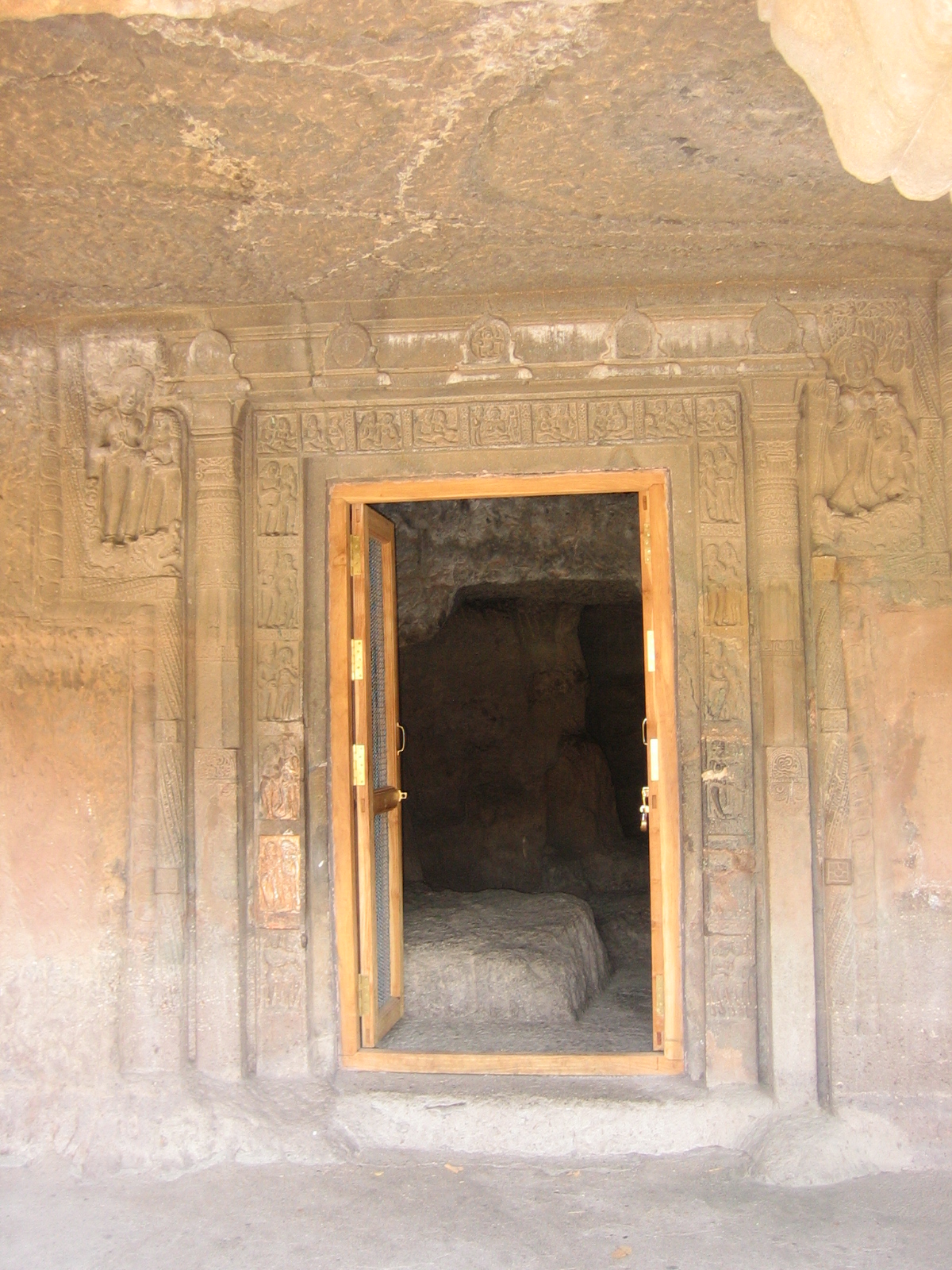


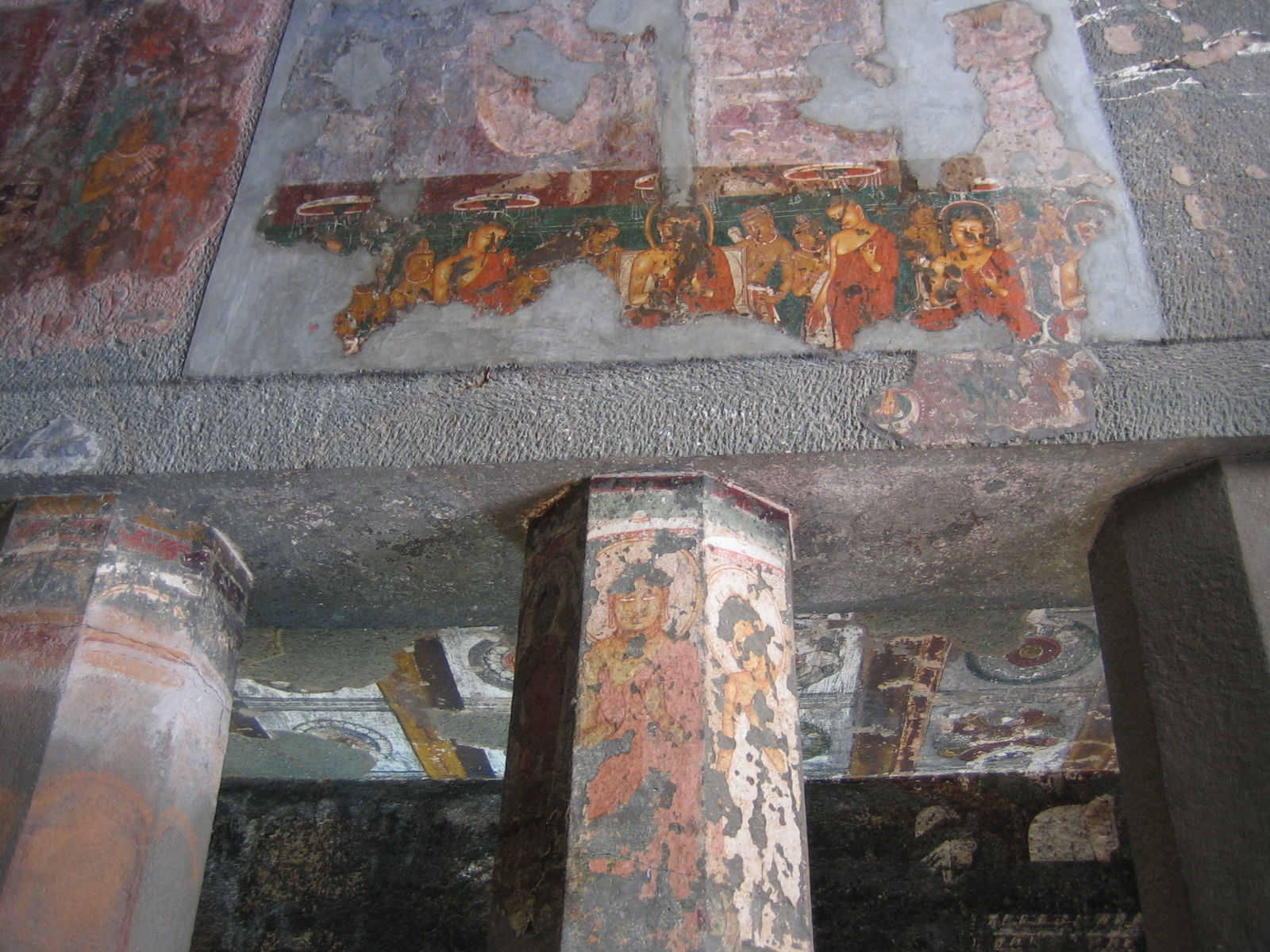


 At first, I found the presence of rowdy kids to be very disturbing but as we slowly made our way to the other end of the site, part of me couldn't help but feel like a kid exploring some new, giant playground. With the steps leading up, down, and around, not knowing what exactly to expect around the corner, and the anticipation of discovering the contents of a new cave, how could I not feel 12 years old? My silent annoyance had given way to a child-like lightheartedness.


